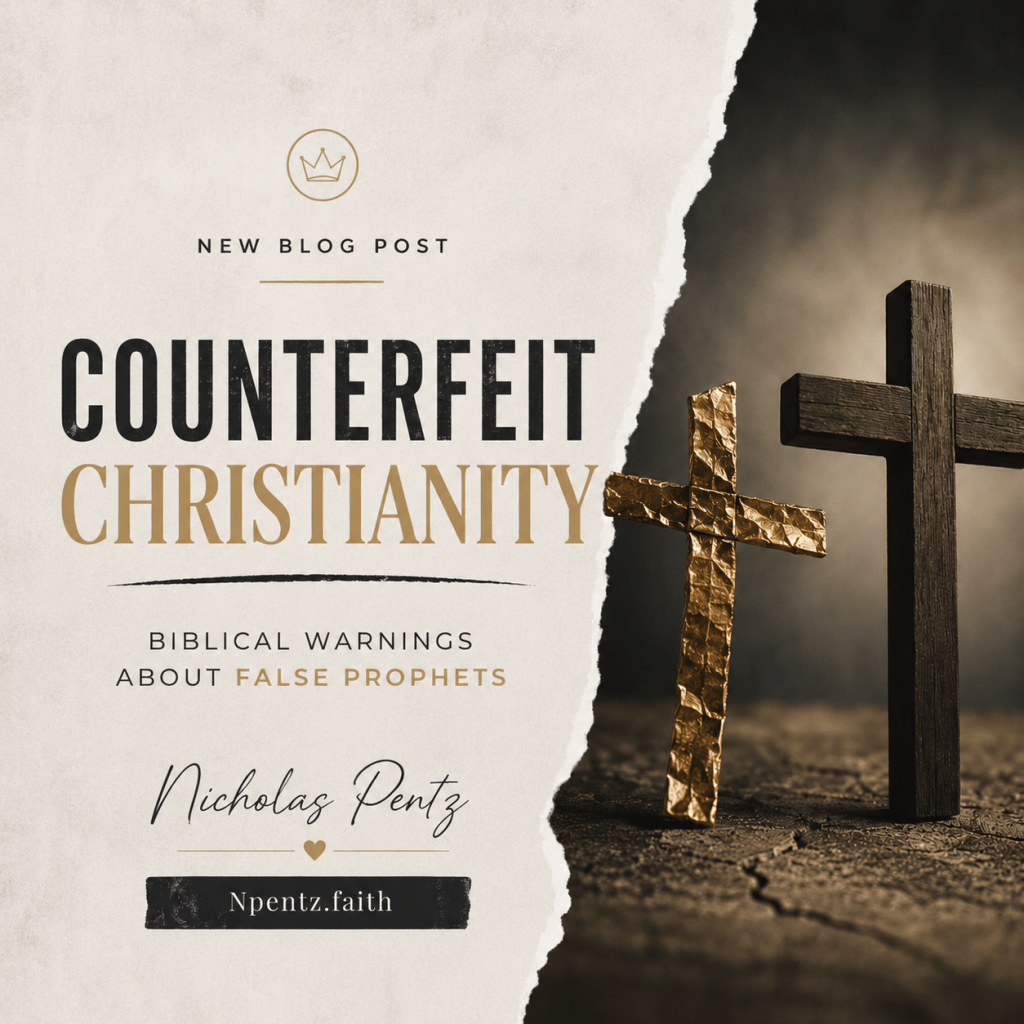
Biblical Warnings about False Prophets
In this modern age of social media, learning has become immeasurably easier. It does not matter what you are trying to understand, within a few clicks, you can access almost anything you want to learn. This has only been amplified by the rise of artificial intelligence. Now, instead of doing a lengthy Google search, AI can often provide immediate answers. Instead of attending a school or sitting under a professor to study systematic or covenant theology, one can now learn independently from a device that fits in the palm of a hand.
This technology can be a tremendous gift in the Christian walk, but like any gift, it can also become a burden.
From the time of the apostles, through the apostolic fathers, the early church fathers, the Reformation, and even just a few generations ago, Christians have traditionally relied on the church, elders, and mentors to guide them into biblical truth. In today’s generation, however, that tradition is slowly losing its authority. There are hundreds, if not thousands of self-proclaimed “ministers” and “preachers” on social media claiming to know the truth, yet many of them do not truly understand what they are teaching.
Timothy 1:7 says:
“They want to be teachers of the law, but they do not know what they are talking about or what they so confidently affirm.”
In this age, many people on social media boldly proclaim “truths” without any real grounding in Scripture. This abundance of online voices can be especially harmful to young Christians who lack discernment. Unable to distinguish truth from error, they may accept the first convincing message they hear as gospel.
I say this from experience, I have often fallen into this same trap. I believed teachings simply because they sounded biblical or were presented in a comforting way, only to later discover they were not grounded in Scripture. At other times, I dismissed things that felt unscriptural only to realize they were deeply rooted in the Bible.
Our emotions and personal biases can easily distort our perception of truth.
So how do we discern whether someone is a faithful teacher?
First, and most importantly, if any teaching contradicts the Word of God, it should be rejected outright. Secondly, we must examine the character of the teacher. As it says in 1 Timothy 1:5:
“The aim of our charge is love that issues from a pure heart and a good conscience and a sincere faith.”
And as Jesus teaches in Gospel According to Matthew 7:15–16:
“Beware of false prophets, who come to you in sheep’s clothing but inwardly are ravenous wolves. You will recognize them by their fruits.”
If someone can recite Scripture, church history, and theological arguments but lacks love, humility, and integrity, then their knowledge is ultimately empty. There are many voices online who may appear intelligent or convincing but inwardly are not guided by truth or reverence for God. Their goal is often not the Kingdom, but influence, recognition, or superiority.
These voices must be approached with caution.
This is not a call for everyone to become theologians or earn degrees in biblical studies. Rather, it is a call to basic discernment. Be thoughtful. Be grounded. Do not accept teaching blindly, even from those you admire. Most importantly, seek Christ sincerely with all your heart, and let Scripture remain the foundation by which all teaching is tested.
 Npentz.faith
Leave a comment